Meal Planning for One: How to Buy Useful Groceries Without Wasting Half
Shopping for one creates an awkward problem: the smallest package is not always the best value, but the larger one is no bargain if half of it spoils. The answer is not a rigid seven-day menu. It is a short, flexible plan that gives each perishable ingredient more than one possible destination.
That distinction matters because schedules and appetites change. Research identifies planning, storage and food-preparation skills as useful targets for reducing household leftovers, but it does not tell us how much waste any particular person will prevent. A systematic review of household leftover management also found that lifestyle, knowledge and storage facilities affect what gets discarded.
Start with the food you already need to use
Before choosing recipes, look through the refrigerator, freezer and pantry. Pick one or two ingredients that need attention and build the next few meals around them. The US Environmental Protection Agency’s household food-waste guidance recommends checking existing food before shopping, planning around what needs to be used and making a list based on the meals likely to be eaten at home.
Plan three or four meals rather than assigning every meal for the entire week. Leave room for an unexpected dinner out, a larger lunch or a day when toast and eggs sound better than the planned recipe. A flexible plan is more useful than an ambitious schedule that assumes appetite and availability will remain constant.
Build a small set of ingredients with several uses
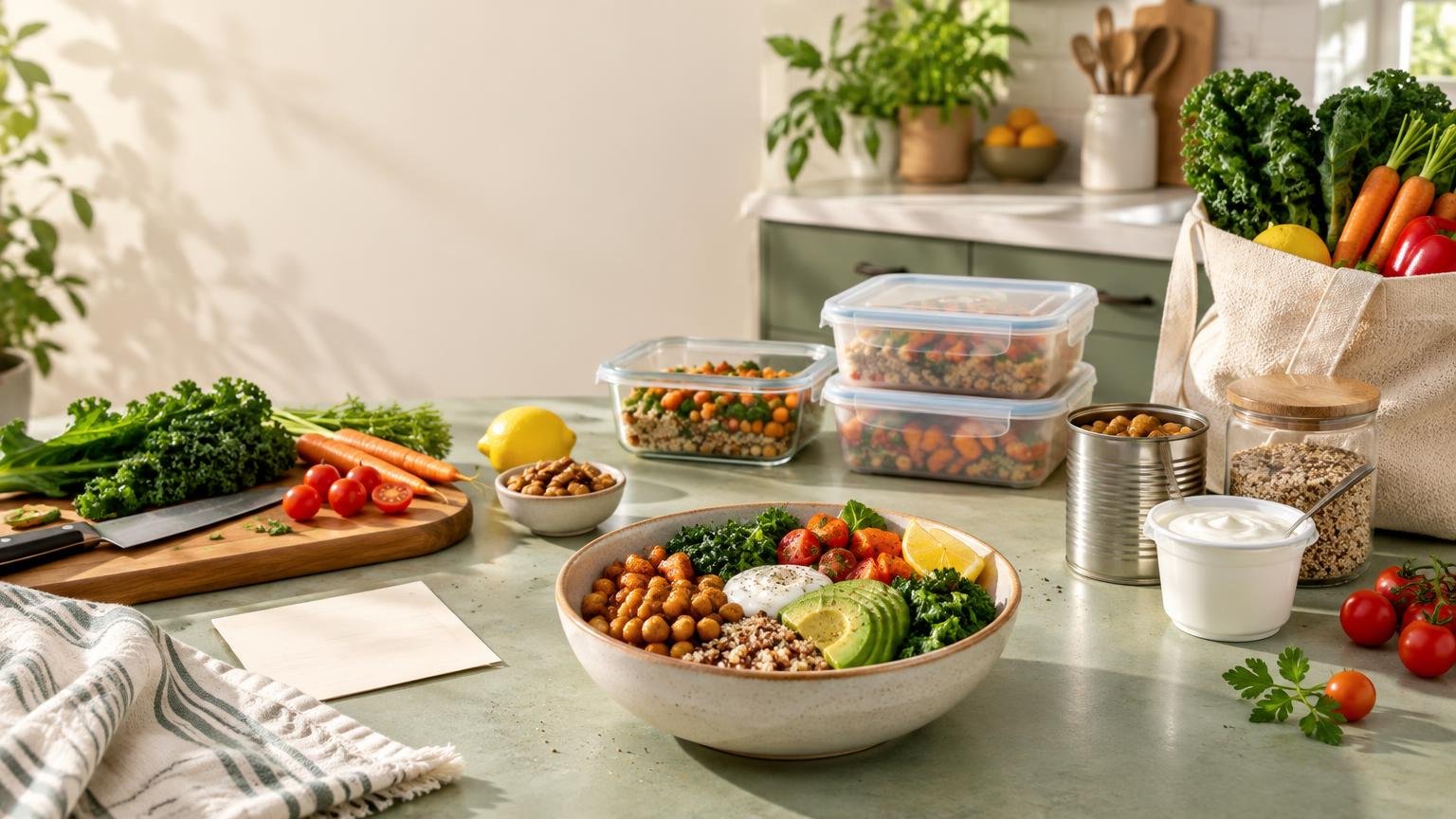
A practical one-person basket might include chicken pieces or canned beans, eggs, a grain or tortillas, carrots, broccoli, peppers, onions, canned tomatoes and a piece of fruit. Seasonings and sauces already in the pantry can change the character of these foods without requiring another collection of highly perishable ingredients.
| Ingredient group | First use | Second use or fallback |
|---|---|---|
| Chicken pieces or canned beans | Grain bowl with roasted vegetables | Wrap, soup or stew |
| Carrots, broccoli, peppers and onions | Roasted vegetable tray | Egg scramble, soup or wrap filling |
| Grain or tortillas | Base for a bowl | Side for stew or carrier for leftovers |
| Eggs | Scramble with vegetables | Quick meal when plans change |
| Canned tomatoes | Bean and vegetable stew | Sauce for leftover vegetables |
This is a framework, not a required menu. Chicken can be replaced with beans, lentils, tofu or another protein that suits the reader’s needs and budget. Rice can become another grain, potatoes or bread. Frozen vegetables can replace some fresh produce when a busy week makes spoilage likely.
Appetite can also be handled without setting a calorie target. Cook components separately where practical, then adjust the amount of grain, protein and vegetables placed on the plate. Extra cooked components can become another meal, while unopened shelf-stable ingredients remain available for a later week.
Turn the basket into several different meals
Begin with a tray of roasted carrots, broccoli, peppers and onions. Serve some with a grain and chicken or beans. On another day, put the cooked vegetables into a tortilla with beans. Use another portion in an egg scramble, and turn remaining vegetables, beans and canned tomatoes into a soup or stew.
Repetition is happening at the ingredient level rather than the meal level. That makes it easier to use a whole pepper or bunch of carrots without eating an identical dinner several nights in a row. It also creates fallback options: vegetables intended for a bowl can move into soup, while eggs provide a relatively long-lasting alternative when the original plan falls apart.
Compare pack sizes by usable cost
Unit price tells you what a package costs per ounce or kilogram. Usable cost asks how much you paid for the amount you will realistically eat. The EPA notes that buying in bulk saves money only when the food is used before it spoils.
- Choose the smaller pack when the food freezes poorly, storage is limited or your plans are uncertain.
- Choose the larger pack when you already know how the extra portions will be divided and stored.
- Count the time and supplies needed for portioning when they materially affect whether you will actually do it.
- Treat a promotion as savings only if it replaces food you would otherwise buy and use.
For example, a larger pack of raw chicken may make sense if meal-sized portions go into the freezer immediately. Raw chicken or turkey pieces should otherwise be refrigerated for only one to two days; FoodSafety.gov lists up to nine months in the freezer for best quality. A large package left in the refrigerator without a plan is not the same bargain.
Use storage to protect the plan
Keep the refrigerator at 40°F (4°C) or below and the freezer at 0°F (-18°C) or below. Food held continuously at 0°F remains safe indefinitely, although recommended freezer times describe quality rather than safety. The current FoodSafety.gov cold-storage chart provides food-specific limits.
Refrigerate or freeze perishable groceries and cooked food within two hours, or within one hour if the food has been exposed to temperatures above 90°F (32°C). Divide leftovers into shallow containers so they cool more quickly. Freezing does not kill all harmful germs, so safe handling and cooking still matter.
Cooked meat or poultry leftovers and soups or stews generally keep for three to four days in the refrigerator. For best freezer quality, FoodSafety.gov lists two to six months for cooked meat or poultry leftovers and two to three months for soups and stews. Reheat leftovers to 165°F (74°C). Labeling containers with the food and date can make the freezer easier to use; this guide to meal-prep labels and what to write on them offers a simple routine.
Raw eggs in their shells can be refrigerated for three to five weeks but should not be frozen in their shells. Hard-cooked eggs keep for one week in the refrigerator and should not be frozen. For produce, the EPA recommends high-humidity drawers for leafy vegetables, carrots, cucumbers and broccoli, and low-humidity storage for peppers and mushrooms. Wash berries, grapes and cherries when ready to eat rather than before storage.
Do not let a date label make the decision by itself
Except for infant formula, package dates generally are not federal food-safety indicators. “Best if Used By” describes quality, and properly handled food may remain safe after that date if it has no signs of spoilage. USDA’s food-date labeling guidance explains the distinction. When storage history is uncertain or food shows signs of spoilage, discard it rather than relying on the printed date alone.
A plan that bends is more likely to work
Meal planning for one works best as a map of possible uses, not a contract with Tuesday’s dinner. Check what you have, choose a few overlapping ingredients, plan only the meals you expect to eat at home and freeze surplus portions before they become an obligation.
People who are pregnant, age 65 or older, or immunocompromised face a higher risk of severe foodborne illness and may need to be especially careful about storage, cooking and leftovers. Anyone with medical nutrition needs, significant food allergies or a history of disordered eating may also benefit from individualized guidance rather than a generic meal framework.
References
- Why people are bad at leftover food management? A systematic literature review and a framework to analyze household leftover food waste generation behavior – PubMed
- Preventing Wasted Food At Home | US EPA
- Cold Food Storage Chart | FoodSafety.gov
- 4 Steps to Food Safety | FoodSafety.gov
- Cook to a Safe Minimum Internal Temperature | FoodSafety.gov
- www.usda.gov
- People at Increased Risk for Food Poisoning | Food Safety | CDC